
Which Exercises Are Safe With Osteoporosis?
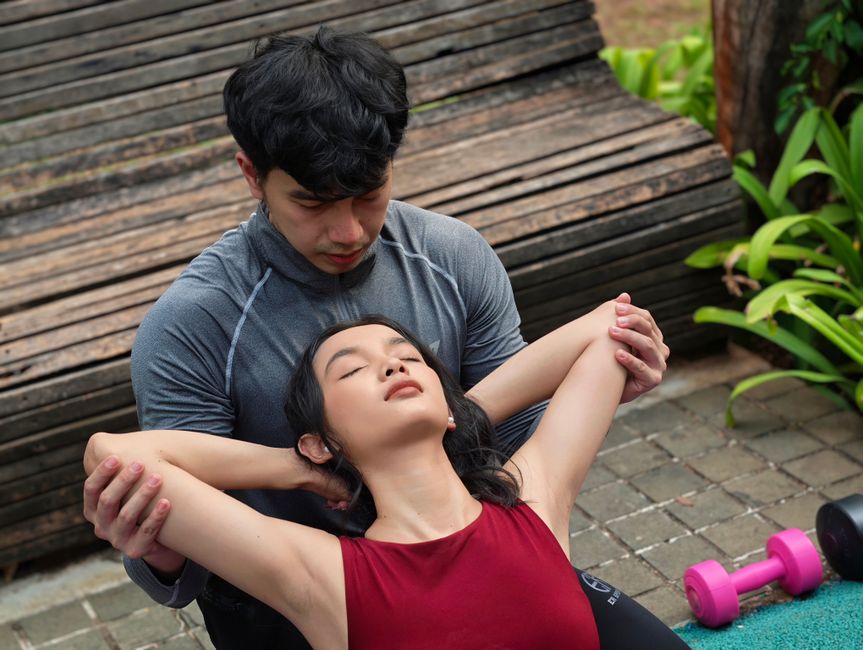
For osteoporosis, the strongest evidence supports a combined routine of progressive resistance, balance and functional training, posture-focused spinal-extension work, and weight-bearing activity chosen for the person's fracture and fall risk. The key modification is simple: keep the spine controlled and avoid rapid, repeated, loaded, or end-range forward bending and twisting, especially after a vertebral fracture.
Think of this as a four-part job, not a search for one perfect exercise. Bone loading, muscle strength, upright posture, and fall prevention solve different problems. Walking can belong in the plan, but it cannot carry the whole plan.
What are the best exercises to strengthen bones with osteoporosis?
The best-supported approach is a multicomponent program: resistance training plus balance training, with functional movement, spinal-extension work, and suitable weight-bearing activity layered around it. Too Fit To Fracture makes this recommendation for people with osteoporosis, including people with osteoporotic vertebral fractures.
Give each category a job. Resistance work challenges the major muscle groups. Balance and functional work targets the situations in which falls happen: standing, stepping, turning, and moving through ordinary tasks. Spinal-extension work supports posture. Weight-bearing activities such as walking add movement and enjoyment, but they are not a substitute for strength and balance work.
| Training element | What it is for | Practical emphasis |
|---|---|---|
| Progressive resistance | Strength and bone-loading stimulus | Major muscle groups, with controlled technique |
| Balance and functional training | Reducing fall exposure | Standing, stepping, and movement challenges matched to current stability |
| Spinal extension | Posture and back-extensor endurance | Upright, neutral-spine positions rather than deep rounding |
| Weight-bearing activity | Additional loading and activity | Walking or another appropriate option added to, not replacing, the core work |
The 2023 CMAJ clinical guideline recommends balance and functional training at least twice weekly. In the Cochrane review it reports, 41 studies involving 7,290 participants found that this training reduced the rate of falls by 24% in 2023 reporting. That is the point of the balance block: not to make a workout look complete, but to reduce a fracture pathway that begins with a fall.
The same 2023 guideline suggests progressive resistance training at least twice weekly, including abdominal and back-extensor exercises. The useful distinction is not “abs versus back.” It is whether the exercise trains the trunk while keeping the spine supported and controlled, rather than repeatedly curling it forward.
Can I lift weights if I have osteoporosis?
Yes, resistance training is a central part of osteoporosis exercise guidance, but the load and movement pattern need to match fracture risk, symptoms, experience, and balance. The 2016 Too Fit To Fracture recommendations describe a target of two sets of at least one exercise for each major muscle group at an 8-12 repetition maximum for people who can tolerate it; that is a training target, not a universal starting line.
Use the “close, hinge, control” rule. Keep an object close to the body, bend through the hips rather than rounding the back, and move without rushing. The 2016 Delphi consensus does not set a blanket lifting limit. Instead, it prioritizes a hip hinge, neutral spinal alignment, and avoiding lifts from or lowering objects to the floor when that would require spinal flexion.
That logic carries into household tasks. A laundry basket, grocery bag, or box is still a load. Before lifting, reduce the job: split the load, raise it to a workable height, or ask for help. When planning a home update, choosing a surface with appropriate traction is also one practical way to reduce fall exposure; this guide to choosing a modern floor that works for your household covers the household decision side.
For someone who has recently fractured a bone, has had a vertebral fracture, or has high fall risk, the 2023 CMAJ guideline recommends advice from an osteoporosis-trained exercise professional before progressing impact exercise. The constraint is not a reason to stop moving. It is a reason to earn progression with form and a plan.
Which exercises should I avoid with osteoporosis in my spine?
Exercises that involve rapid, repetitive, sustained, weighted, or end-range spinal flexion or twisting may need modification, especially for people at high fracture risk. In plain terms: avoid treating a deep forward bend, loaded rotation, or fast sit-up as harmless just because it is familiar.
The 2023 CMAJ guideline uses that exact movement pattern as its warning sign. The 2022 UK consensus statement similarly advises against high degrees of spinal flexion during exercise and daily activity, including deep forward bends, some toe touches, and flexion-heavy yoga or Pilates variations.
Replace the risky pattern; do not merely remove it. Replace a rounded-back pickup with a hip hinge or a raised surface. Replace a fast abdominal curl with a neutral-spine trunk exercise selected by a qualified professional. Replace deep twisting with controlled movement that does not force the spine to end range. The 2020 systematic review of exercise safety found serious adverse events were rare in intervention studies, but it also found that certain yoga movements and sit-ups involving spinal flexion were associated with greater vertebral-fracture risk.
Impact needs the same risk filter. The 2022 UK consensus states that people with vertebral fracture or multiple low-trauma fractures should usually stay at impact equivalent to brisk walking unless individualized professional advice supports more. The decision turns on fracture history, symptoms, balance, prior activity, and technique. No online checklist can measure those factors for a particular person.
The next useful move is an exercise inventory. List the current activities, then mark where they involve loading, forward bending, twisting, impact, getting down to the floor, or getting back up. Bring that list to a physical therapist or qualified exercise professional. That turns a vague warning into a program that can actually be used this week.
Frequently Asked Questions
Is walking enough exercise for osteoporosis?
No. Walking can be a useful weight-bearing activity and may be enjoyable, but the 2023 CMAJ guideline says it should be added to, rather than replace, balance, functional, and resistance training. Its effects on fractures and falls for people at fracture risk remain uncertain, and the Too Fit To Fracture recommendations describe only a modest effect on spine bone mineral density.
Can I do yoga, sit-ups, or toe touches with osteoporosis?
The movement matters more than the label. The 2022 UK consensus advises avoiding high degrees of spinal flexion, which can include deep toe touches and flexion-heavy yoga or Pilates positions; the 2020 safety review also identified certain yoga movements and sit-ups involving spinal flexion as associated with greater vertebral-fracture risk, although events were rare. A modified class or an alternative that keeps the spine neutral can reduce that exposure.
How can I exercise safely after a vertebral compression fracture?
Start with an assessment by a physical therapist or exercise professional trained in osteoporosis, particularly when pain, multiple fractures, or pronounced curvature are present. The Too Fit To Fracture consensus prioritizes neutral spinal alignment and correct form before intensity, with slow, controlled progression and care during bending, twisting, lifting, transfers, and balance challenges.
Sources
- Canadian Medical Association Journal: Clinical practice guideline for management of osteoporosis and fracture prevention in Canada: 2023 update
- Too Fit To Fracture: Exercise Recommendations for Individuals With Osteoporosis or Osteoporotic Vertebral Fracture
- British Journal of Sports Medicine: Strong, steady and straight: UK consensus statement on physical activity and exercise for osteoporosis
- Journal of Frailty, Sarcopenia and Falls: Adverse events and safety issues associated with physical activity and exercise for adults with osteoporosis and osteopenia
- Too Fit To Fracture: Outcomes of a Delphi Consensus Process on Physical Activity and Exercise Recommendations for Adults With Osteoporosis With or Without Vertebral Fractures
Disclaimer: This article is for general information only and is not medical advice. It is not a substitute for diagnosis or treatment by a qualified healthcare professional. Always speak to your doctor before acting on anything you read here.
You may also like

Hire a Shopify Website Developer with Confidence
A reliable Shopify website developer hire starts with clear scope, comparable quotes, verified work, and written milestones and ownership terms.
Can I Work Out After a Deep-Tissue or Sports Massage?
Learn how to time lifting, strenuous workouts, and gentle activity after deep-tissue or sports massage using soreness as your guide.
How Can I Exercise and Lose Weight Safely With Hypothyroidism?
A practical, progressive exercise framework for adults with hypothyroidism, fatigue, joint pain, or stalled weight-loss progress.

Should I Apply to Swiss Public, International, or Language Schools?
Compare Swiss public, international, and language-school teaching routes before you apply, including recognition, language, and permit checks.