
Which Group Fitness Class Is Best for an Anxious Beginner?
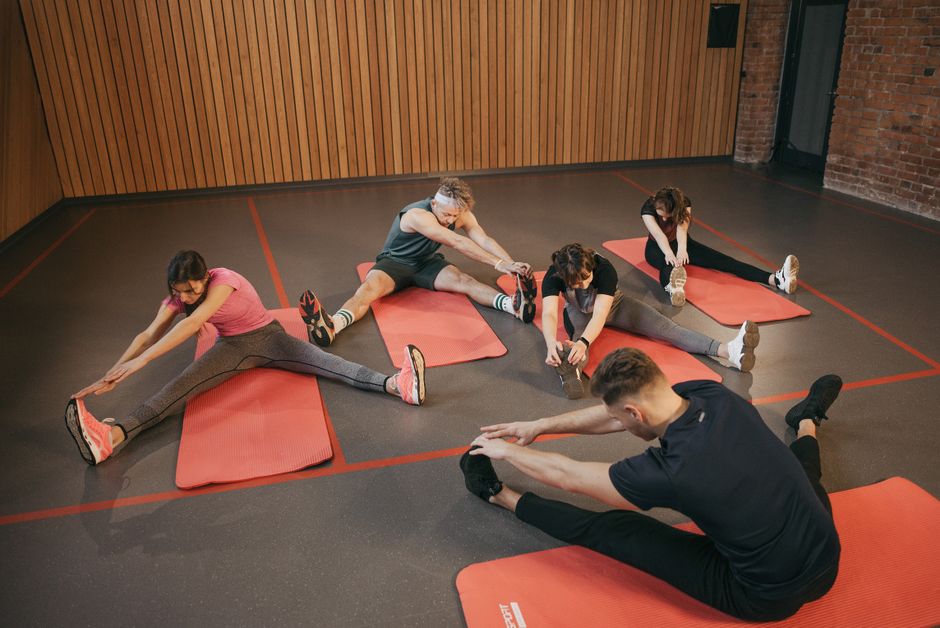
The best first group fitness class is one that matches your current ability, offers visible modifications, and lets you speak to the instructor before it begins. Gentle yoga, water exercise, beginner strength, and low-impact cardio are sensible formats to evaluate first; the decisive test is whether the class treats adjustment as normal rather than as failure.
The apparent paradox is that a class can call itself “beginner” and still be a bad first class. Labels describe marketing; a beginner-ready environment is demonstrated through instructor behavior, accessible options, a manageable intensity, and a clear route to stop or scale back. Anxiety is not useful evidence that you are incapable. It is often evidence that the system has failed to explain its rules.
What type of fitness class is best if I have never exercised before?
The best starting format is the one whose movements and intensity can be reduced without making you leave the activity entirely. The Centers for Disease Control and Prevention says in its 2024 guidance that an activity must be appropriate for an individual’s abilities because the same activity can feel very different across fitness levels and health conditions.
Use the talk test rather than the room’s apparent effort as the first filter. In the CDC’s 2024 guidance, moderate effort means you can talk but not sing; at vigorous effort, you cannot say more than a few words without pausing for breath. A class that begins at an effort beyond that conversation-level test is not automatically bad, but it is a demanding place to start when the format itself is unfamiliar.
| Format | Why it can be manageable | What to verify before attending |
|---|---|---|
| Water exercise | The CDC’s 2024 guidance lists water aerobics as moderate-intensity activity. The Arthritis Foundation reports that aquatic workouts can combine cardiovascular, strengthening, and stretching work with less stress on joints. | Ask whether the session has a low-impact entry option and whether the pool setup is accessible to you. |
| Gentle or beginner yoga | The Arthritis Foundation identifies gentle yoga and beginner yoga as formats likely to be less strenuous and to provide more instruction. | Ask whether poses can be adapted and whether the instructor has relevant training or experience with limitations you need considered. |
| Beginner strength | The National Institute on Aging says beginners can start movements without weights or resistance bands until the movements feel comfortable. | Check whether the instructor demonstrates bodyweight and equipment alternatives before loading an exercise. |
| Low-impact cardio or dance | These classes can make aerobic activity social and structured, but their pace can vary sharply. | Watch for a clearly demonstrated lower-impact version rather than assuming one will be available. |
Water exercise deserves special attention when joint stress is part of the question. The Arthritis Foundation reports that water workouts may allow movement with less discomfort and strain. That is a property worth assessing, not a guarantee that every water class has an appropriate pace.
Begin with a class that leaves cognitive room to learn. If choreography changes quickly, equipment appears without explanation, or every option assumes prior movement knowledge, the class is asking you to learn its language and meet its physical demands simultaneously. That is an unnecessary double burden.
How do I know whether a class really accommodates beginners?
You know a class accommodates beginners when its modifications, screening, and trial process are visible before you pay, not improvised after you struggle. The American College of Sports Medicine recommends visiting several facilities before joining; its facility guidance says some locations offer a day- or week-long trial so prospective members can observe classes and staff before committing.
Evaluate the description as evidence. “All levels” is not a finding. Stronger signals are concrete: a stated beginner option, an invitation to arrive early, a description of lower-impact movements, a limit on class size if the provider publishes one, accessible equipment information, and a named route for questions. Absence is also evidence. When a provider cannot explain how a newcomer is introduced to the format, public information does not support calling it beginner-friendly.
- Look for instructor credentials from nationally recognized organizations and ongoing training, as ACSM recommends in its facility checklist.
- Ask whether pre-activity screening is offered and whether it matches the class you are considering.
- Ask how staff modify equipment, facilities, or programming for people with particular needs.
- Check whether the facility can explain its emergency plan, AED availability, and staff preparation in CPR, AED use, and first aid.
- Use a trial to observe whether the instructor teaches alternatives to the whole room, rather than reserving help for the most confident participants.
The distinction is simple: accommodation is operational, not sentimental. A warm greeting matters, but it cannot substitute for an instructor who can identify an alternative movement, show where equipment belongs, and explain when assistance is available.
For people balancing health concerns with a new routine, a focused discussion of activity limits can reduce guesswork. This site’s guide to which exercises are safe with osteoporosis addresses a separate condition-specific question; it does not replace a class-level conversation about modifications and screening.
What should I ask an instructor before my first exercise class?
Ask whether the class has modifications for a first-timer, when they will be demonstrated, and how you can signal for help during the session. The American College of Sports Medicine advises instructors to speak with new students before class, learn their experience with the format, ask about injuries or restrictions, and explain when assistance or modifications will be available.
A concise conversation has more value than a long biography. State that this is your first class in the format, identify any limitations you want the instructor to know about, and ask where to position yourself so demonstrations are visible. Then ask the practical question that exposes the culture: “If I need to reduce the movement or pause, what should I do?” A useful answer names an option. A vague answer transfers the entire decision back to you.
The Arthritis Foundation recommends asking a yoga instructor about experience with arthritis, Yoga Alliance certification, and teaching experience before enrolling. That principle generalizes without pretending all conditions are the same: ask about qualifications relevant to the format and about the instructor’s method for adapting participation. Credentials establish a baseline; attentive instruction establishes whether the baseline reaches the room.
Also establish the stopping rule before exertion makes judgment harder. The National Institute of Diabetes and Digestive and Kidney Diseases advises inactive people to start slowly, assess how they feel, and increase duration and frequency gradually. It says minor discomfort or muscle soreness can occur when activity is new and should fade as the body adapts, while nausea or pain can mean the person did too much.
The National Institute on Aging likewise says aerobic activity should not cause dizziness, chest pain or pressure, or nausea. NIDDK says to stop activity and seek help for chest, neck, shoulder, or arm pain, tightness, or pressure; extreme shortness of breath; dizziness; or sickness. These are not benchmarks to negotiate with determination.
One final calibration matters. The CDC’s 2024 guidance sets a broad weekly target of 150 minutes of moderate-intensity aerobic activity, 75 minutes of vigorous activity, or an equivalent combination, alongside muscle-strengthening activity on at least 2 days each week. That target is not an instruction to make a first class difficult. The same guidance permits activity to be split into smaller sessions; consistency begins with a workload you can understand, recover from, and choose again.
Frequently Asked Questions
What happens if I cannot keep up with the class?
A suitable class gives you a modification, a lower-intensity movement, or permission to pause without treating that choice as a disruption. The American College of Sports Medicine says instructors should assure new participants that they can request modifications or assistance at any time. If the only workable option is to push through a pace that feels unsafe, the format or class level is a poor first match.
Should I try a free class before buying a membership?
A trial can reduce uncertainty because it lets you observe the instructor, participants, equipment setup, and actual pace before making a longer commitment. The American College of Sports Medicine recommends visiting several facilities before joining and notes that some offer day- or week-long trial memberships. Confirm the trial terms directly with the facility, because public information does not establish a universal policy.
How early should I arrive for my first group fitness class?
Arrive early enough to introduce yourself, explain relevant limitations, locate equipment, and hear the instructor's modification plan before the session starts. The Arthritis Foundation recommends arriving about 15 minutes early for a first yoga class so there is time for that conversation. The appropriate arrival time can vary by facility and check-in process.
Sources
- Centers for Disease Control and Prevention: What Counts as Physical Activity for Adults
- National Institute of Diabetes and Digestive and Kidney Diseases: Staying Active at Any Size
- American College of Sports Medicine: Selecting the Right Fitness Facility
- American College of Sports Medicine: Reducing Group Exercise Intimidation
- National Institute on Aging: Three Types of Exercise
- Arthritis Foundation: Starting a Beginner Yoga Practice
- Arthritis Foundation: Water Exercise Benefits
Disclaimer: This article is for general information only and is not medical advice. It is not a substitute for diagnosis or treatment by a qualified healthcare professional. Always speak to your doctor before acting on anything you read here.
You may also like

Hire a Shopify Website Developer with Confidence
A reliable Shopify website developer hire starts with clear scope, comparable quotes, verified work, and written milestones and ownership terms.

Can I Work Out After a Deep-Tissue or Sports Massage?
Learn how to time lifting, strenuous workouts, and gentle activity after deep-tissue or sports massage using soreness as your guide.
How Can I Exercise and Lose Weight Safely With Hypothyroidism?
A practical, progressive exercise framework for adults with hypothyroidism, fatigue, joint pain, or stalled weight-loss progress.

Should I Apply to Swiss Public, International, or Language Schools?
Compare Swiss public, international, and language-school teaching routes before you apply, including recognition, language, and permit checks.